

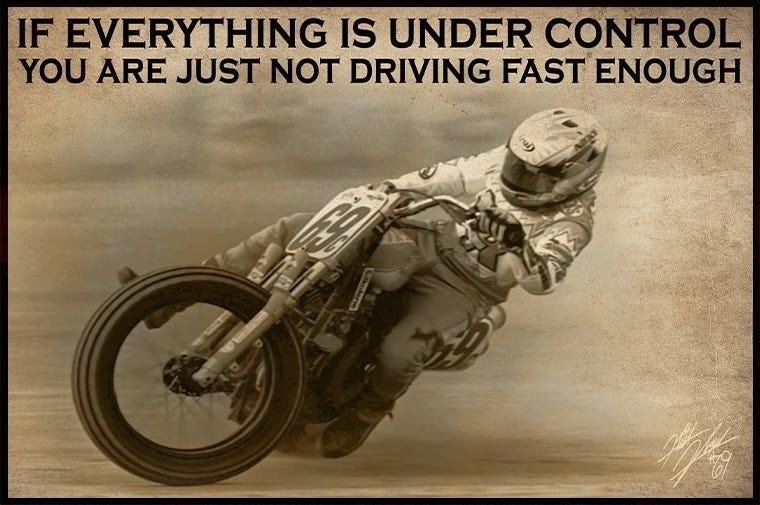
I see two errors. Scroll down.
.
.
.
.
.
.
.
.
.
.
The first error, which I expect you’re able to catch by now, is that there’s no comma after the subordinate clause. Remember, when the subordinate clause comes first in a sentence, it needs a comma after it (see what I just did there?).
WRONG: If you fling snot at me one more time I’ll kill you.
RIGHT: If you fling snot at me one more time, I’ll kill you.
WRONG: After she had bathed Mathilda paraded around the apartment naked.
RIGHT: After she had bathed, Mathilda paraded around the apartment naked.
WRONG: When Don tried the same thing the entire neighborhood laughed at him.
RIGHT: When Don tried the same thing, the entire neighborhood laughed at him.
When the subordinate clause is not in initial position, you don’t need a comma.
WRONG: I’ll kill you, if you fling snot at me one more time.
RIGHT: I’ll kill you if you fling snot at me one more time.
WRONG: Mathilda paraded around the apartment naked, after she had bathed.
RIGHT: Mathilda paraded around the apartment naked after she had bathed.
WRONG: The entire neighborhood laughed at Don, when he tried the same thing.
RIGHT: The entire neighborhood laughed at Don when he tried the same thing.
Simple. Easy. Got it?
One edge-case exception is with the subordinating conjunction because.
I didn’t do it, because I love you. (He loves her.)
I didn’t do it because I love you. (He did it for a reason other than love.)
Both (1) and (2) are correct, but the presence or absence of the comma changes the nuance of the sentence. Remember, though, that this is an edge case. Generally speaking, you’re better off following the rule I described above.
And I assume you remember what a subordinate clause is, yes? It’s also called a dependent clause because it depends on the main (independent clause) to form a complete idea. It cannot stand on its own. Look at this sentence:
We are the shield that guards the realms of men.
INDEPENDENT CLAUSE: We are the shield
DEPENDENT CLAUSE: that guards the realms of men.
The second error is, of course, the lack of a period at the end of the sentence. Today’s internet generation apparently thinks periods are passive-aggressive or some such nonsense. Just a cover for their laziness and cowardice. They really have that much to fear from a simple punctuation mark?