

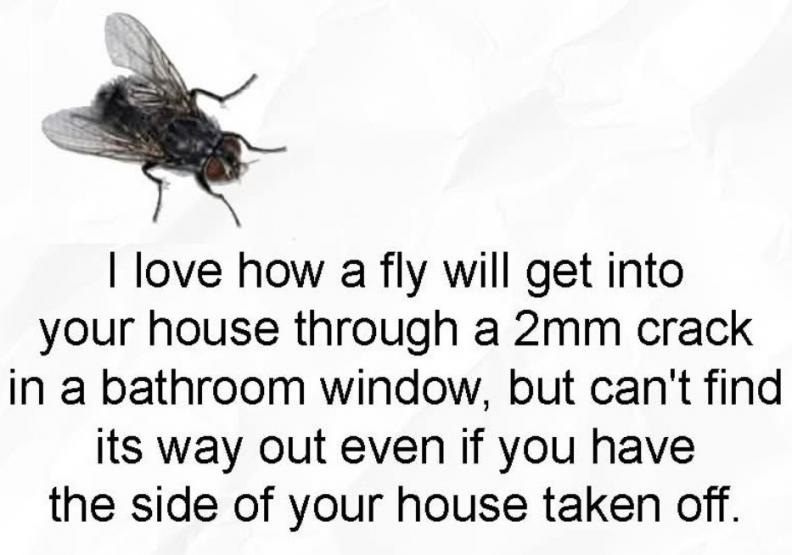
If you don’t know what a compound predicate is, you’re going to keep making the above mistake because, like a lot of idiots out there, you blithely assume that a comma marks a pause. While that’s technically true (commas do affect rhythm), if that’s the only rule you go by, you will end up placing commas where they don’t belong and omitting commas where they do belong.
There are other problems above as well. Scroll down.
.
.
.
.
.
.
.
.
.
.
Let’s deal with the minor problem first. Look at the following:
a three-mile run
a ten-day fast
a nine-fingered Frodo
a pain-addled teacher
a wine-drunk Odysseus
tax-paying citizens
my thirteen-tentacled god
I’m sure you get the idea since we’ve gone over it many times before: Hyphenate phrasal adjectives that precede the nouns they modify. So a 2mm crack should be a 2-mm crack. Note, too, that you can’t write it as a 2mm crack because metric measurements require a space before the unit marker:
3 km, not 3km
2 mm, not 2mm
60 kg, not 60kg
etc.
And this is just trivia, but note that, with the Imperial system, the unit markers are abbreviations requiring periods, but in the metric system, the unit markers don’t have periods because they’re considered symbols, not abbreviations.
RIGHT: 5 cm, 10 km, 3 ft., 20 mi.
WRONG: 5 cm., 10 km., 3 ft, 20 mi
Okay, let’s move on to the main problem. In the meme above, there’s a comma before the conjunction but, but there shouldn’t be. Why? Because you can’t interrupt compound predicates with a single comma.
RIGHT: Sarah sat on the toilet and screamed.
WRONG: Sarah sat on the toilet, and screamed.
A compound predicate is when the “verby” part of the sentence (the predicate) shows two actions being done by one or more subjects. The actions are separated by a coordinating conjunction (for, and, nor, but, or, yet so—the FANBOYS). Like above: Sarah (1) sat and (2) screamed. Even if I lengthen the sentence with other content, it’s still a compound predicate if there are two actions.
• Yesterday, Sarah (1) sat gingerly on the toilet and (2) screamed her head off.
So let’s examine the meme as originally written.
I love how a fly will get into your house through a 2mm crack in a bathroom window, but can’t find its way out even if you have the side of your house taken off.
We already know to change 2mm crack to 2-mm crack since it’s a phrasal adjective. The clause with the comma problem, though, looks like this:
[A] fly will get into your house through a 2mm crack in a bathroom window, but can’t find its way out even if you have the side of your house taken off.
The subject = a fly
The two actions = (1) will get into your house, (2) can’t find its way out
The two actions are (correctly) separated by a but (coordinating conjunction). But what is that damn comma doing there? Take it out!
Properly written, the sentence should be:
I love how a fly will get into your house through a 2-mm crack in a bathroom window but can’t find its way out even if you have the side of your house taken off.
The above might look like a run-on without the improper comma, and that’s probably part of what prompted the comma’s insertion. But the insertion is ungrammatical because it’s interrupting a compound predicate. Learn to recognize compound predicates! And know that, while interrupting with one comma is bad, interrupting with two commas (a parenthetical expression) is okay. Examples:
Lori aimed at the target, as carefully as always, and fired.
Stellan walked, full of nervous trepidation, and thought bleak thoughts.
Mr. Chandler tripped the alarm, startling the thugs, and gave them a stony look.
Also okay is a compound predicate with three or more actions, all separated by commas. Here are some examples:
My dog farted, launched into the air, and came down in a nest of vipers.
Adama sneezed, sharted, and pissed his pants—all at the same time.
Claudia greedily ate the goldfish, chased it with Everclear, and sang an opera.
Kirk killed the Klingon, made love to the Romulan, and boogied to disco.
Note the difference, though, between a sentence with a compound predicate and a sentence with two independent clauses.
I sneeze and create mountains. (compound predicate)
I sneeze, and I create mountains. (2 independent clauses)
A clause, you’ll recall, has both a subject and a verb (more specifically, it has a subject and a related predicate). In sentence (1) above, there’s only one subject and two verbs. In sentence (2), there are two subjects and two verbs.
Keep all of this in mind, O Human.
Well, I've heard this all somewhere before. Except for the part about metric abbreviations. I've been writing it as 1KM without the space forever and have never been called out on it. And I didn't put a comma after "forever" because the preceding sentence is a compound predicate. Although if I had written, "and I have never," it would be two independent clauses requiring a comma.
Lesson learned. Until I mess up again next time.